
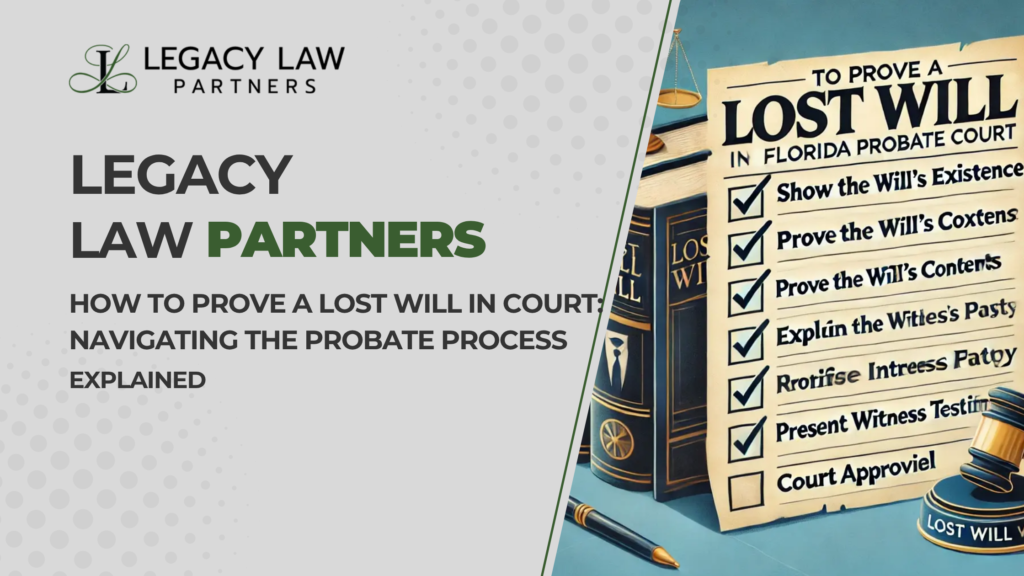
Losing a will after someone passes away can be a distressing situation. When the original will goes missing, it can create significant legal and emotional challenges for the family. If the original will cannot be found, the estate may be treated as if the decedent died without a will. Fortunately, it is possible to probate a lost will in the United States, but it requires following a specific legal process.
What Is a Lost Will?
Defining Lost vs. Destroyed Wills
A will is generally considered “lost” when the original document cannot be found after a diligent search. A will is considered “destroyed” when the physical document has been destroyed. This is different from a will that was intentionally destroyed by the testator with the intent to revoke it. The distinction is important in probate law, as intent plays a key role in determining whether the will is still valid.
An estate planning attorney can help navigate this complexity.
Understanding the Presumption of Revocation
If a will was last known to be in the testator’s possession but cannot be found after their death, courts often apply a presumption of revocation. This means the law assumes the testator intentionally destroyed the will with the intent to revoke it.
To probate a lost will, this presumption must be overcome with clear and convincing evidence that the testator did not revoke the will.
What Happens If a Will Cannot Be Found?
Intestate Succession Explained
When a will cannot be proven or the presumption of revocation is not overcome, the decedent’s estate is distributed according to intestacy laws. These laws dictate how assets are divided among surviving family members and may not reflect the testator’s wishes.
Distribution Under State Law
In cases of intestacy, the estate is divided according to the applicable state’s laws. Generally, this involves distributing assets to:
- The surviving spouse
- Children
- Parents or other relatives
The order and distribution vary by state, which is why having a valid and accessible will is important.
Importance of Proving a Lost Will
Proving a lost will is essential to ensure the testator’s intent is respected and their wishes are carried out. Without a valid will, the estate will be distributed under intestacy laws, which may not align with the decedent’s intentions.
Can a Lost Will Be Probated in the U.S.?
Strict Requirements for Probate
Yes, a lost will can be probated in the United States, but strict requirements apply. The party seeking to probate the will must provide clear and convincing evidence of:
- The will’s proper execution
- The contents of the will
- That the testator did not revoke the will
Meeting these requirements is necessary for the court to admit a copy or other evidence of the will to probate.
State Variations in Probate Laws
Probate laws vary significantly by state. While general principles are similar, specific requirements regarding evidence, witnesses, and procedures differ. It is important to consult an attorney familiar with the probate laws in the relevant state.
Legal Requirements to Prove a Lost Will in Court
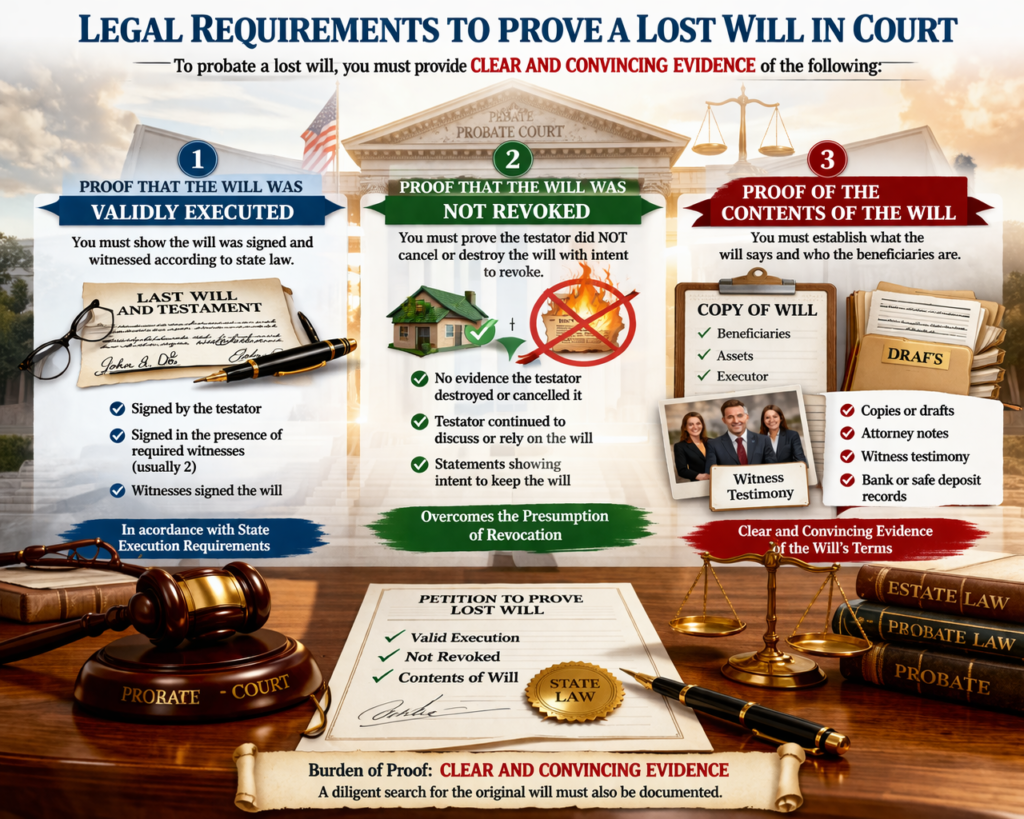
Proof That the Will Was Validly Executed
To probate a lost will, it must be shown that the will was properly executed under applicable state law. This typically involves demonstrating that the testator signed the will and that it was witnessed in accordance with state requirements.
Proof That the Will Was Not Revoked
Overcoming the presumption of revocation is a critical step. Evidence must show that the testator did not intend to revoke the will before death. This may include testimony from individuals familiar with the testator’s intentions.
Proof of the Contents of the Will
The contents of the will must also be proven with clear and convincing evidence. This may include:
- A copy of the will
- Draft versions
- Notes or records from the drafting attorney
What Evidence Can Be Used to Prove a Lost Will?
Using Copies of the Will
If the original will is missing, a copy can serve as important evidence. While courts prefer the original, they may admit a copy if it is proven to be an accurate representation and other legal requirements are met.
Witness Testimony and Its Importance
Witness testimony can help establish that the will was properly executed and that the testator had the required mental capacity and intent.
Role of Attorney Testimony
The attorney who prepared the will may provide testimony regarding:
- The will’s execution
- The testator’s intent
- The contents of the document
Step-by-Step Process to Probate a Lost Will
Filing a Petition in Probate Court
The process begins by filing a petition with the probate court requesting that the lost will be admitted to probate. The petition should include relevant details about the will and the circumstances surrounding its loss.
Providing Necessary Evidence
The petitioner must present supporting evidence, including copies, testimony, and documentation, to establish the will’s validity and contents.
Understanding the Court Hearing
At the hearing, the petitioner presents evidence, and witnesses may testify. Interested parties may support or contest the petition. The court will then decide whether to admit the lost will to probate.
Challenges and Risks in Proving a Lost Will
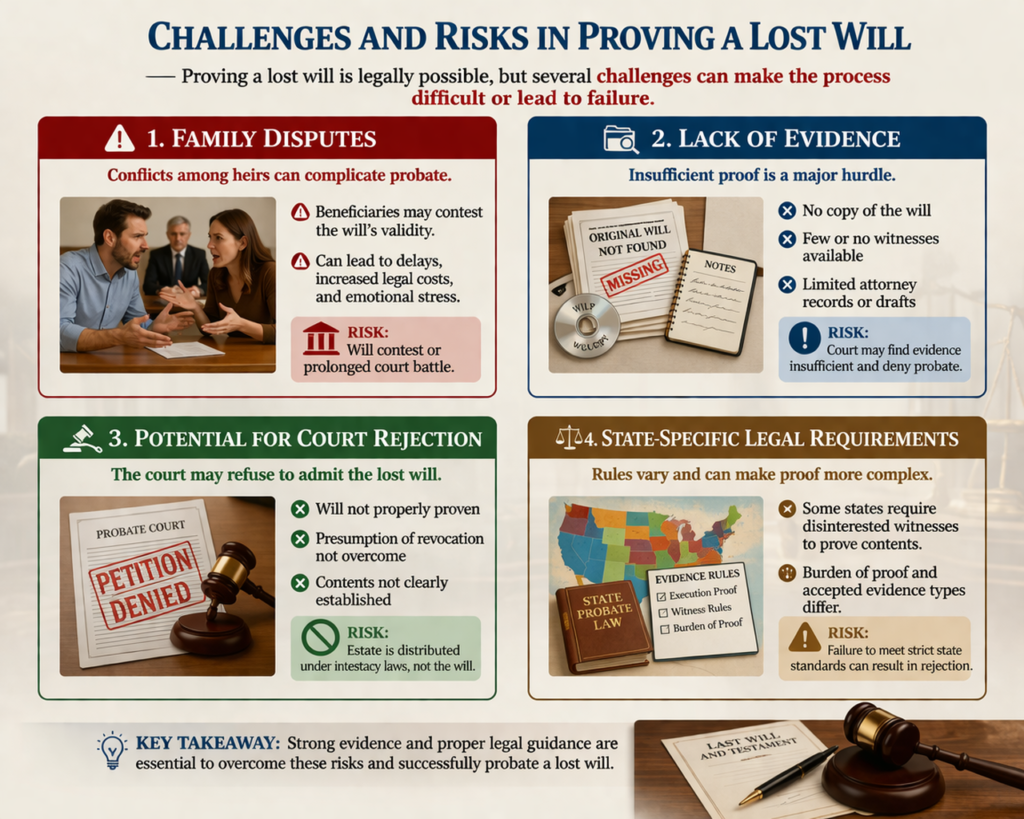
Family Disputes
Disagreements among beneficiaries can lead to contests and delays in the probate process.
Lack of Evidence
Insufficient evidence may result in the court denying the petition.
Potential for Court Rejection
If legal requirements are not met, the court may refuse to admit the will, resulting in distribution under intestacy laws.
State-Specific Considerations (Connecticut Example)
In Connecticut, as in other states, proving a lost will requires clear and convincing evidence. Courts also require proof that a diligent search was conducted and that the testator did not revoke the will.
Why You Should Hire a Probate Attorney
Navigating Legal Requirements
Probating a lost will involves complex legal standards. An attorney can help ensure compliance with state laws.
Developing a Legal Strategy
An attorney can assist in gathering evidence, preparing witnesses, and addressing potential challenges.
Avoiding Common Mistakes
Legal guidance can help avoid errors that could prevent the will from being admitted to probate.
Tips to Prevent Issues with Lost Wills
Securing Your Will Properly
Store your will in a secure location, such as:
- With your attorney
- In a safe location at home
- In a safe deposit box (with proper access arrangements)
Ensure your executor knows where the will is located and how to access it.
Informing Your Executor
Provide clear instructions to your executor about where the will is stored to avoid delays.
Engaging an Attorney for Estate Planning
An attorney can help ensure proper storage, updates, and accessibility of your will.
Frequently Asked Questions
Can a Copy of a Will Be Used in Probate?
Yes, but only if the court is satisfied that the copy is accurate and that the original was not revoked.
Who Has the Burden of Proof?
The party seeking to probate the lost will has the burden of proof and must meet the clear and convincing evidence standard.
How Long Does It Take?
The timeline varies depending on the complexity of the case, available evidence, and whether disputes arise.
What If Someone Destroys a Will?
A will is considered revoked only if it was destroyed by the testator with intent to revoke it. If destroyed accidentally or by another person without consent, it may still be possible to probate the will with sufficient evidence.
Conclusion
Proving a lost will in court can be a complex and demanding process, but it is possible under U.S. law when the proper legal standards are met. The key is presenting clear and convincing evidence that the will was validly executed, that it was not revoked by the testator, and that its contents can be accurately established.
Because probate laws vary by state and the burden of proof is high, even small gaps in evidence can affect the outcome. Acting promptly, conducting a thorough search for the original will, and gathering supporting documentation and testimony are all critical steps.
Ultimately, working with an experienced probate attorney can make a significant difference in navigating the process efficiently and ensuring that the testator’s wishes are honored.

