
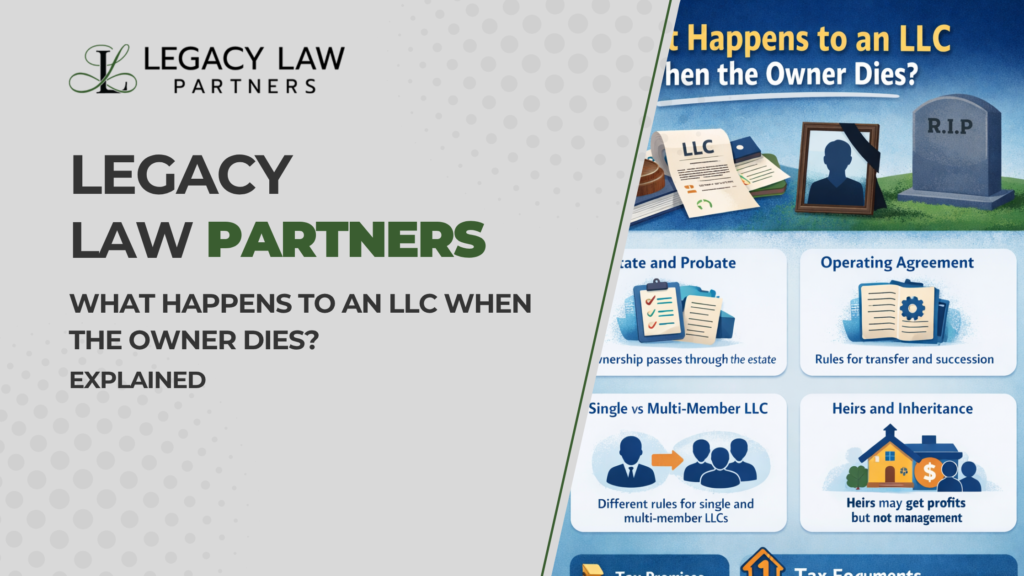
When an LLC owner dies, many business owners wonder what will happen to their LLC. The death of a member raises concerns about whether the business will dissolve, how ownership will transfer, and how to protect the business. Understanding the legal and operational consequences is crucial for a smooth transition.
Does an LLC Automatically Dissolve When the Owner Dies?
One of the first questions business owners ask when an LLC member dies is whether the LLC automatically dissolves. The answer depends on several factors, including state law and the LLC’s operating agreement. The death of a member does not always mean the business will come to an end.
Understanding LLC Dissolution Rules
In most U.S. states, the death of an LLC member results in dissociation, not automatic dissolution. Dissociation means the member is removed from the LLC, but the business can continue operating.
However, dissolution may occur if:
- The operating agreement requires it, or
- State law applies and no agreement addresses the situation
These rules vary by state, making it important to understand your jurisdiction’s laws.
State Variations in LLC Dissolution
State law varies significantly regarding what happens when an LLC member dies. Some states allow the LLC to continue automatically, while others require approval from remaining members. In cases where no operating agreement exists, default state rules will apply.
Consequences of Dissolution
If an LLC is dissolved due to a member’s death, it does not immediately stop all activity. Instead, the LLC enters a winding-up process, which includes:
- Completing ongoing business obligations
- Liquidating assets
- Paying debts and liabilities
- Distributing remaining assets to members or heirs
This process can disrupt operations and lead to financial loss, which is why advance planning is essential.
What Happens to a Single-Member LLC When the Owner Dies?

A single-member LLC presents a unique situation because there are no remaining members to continue operations immediately. Ownership and control typically pass through the deceased owner’s estate.
Transfer Through Estate
When a single-member LLC owner dies, the ownership interest becomes part of their estate. It is transferred according to:
- The owner’s will
- A trust (if applicable)
- State intestacy laws if no will exists
The ownership interest must typically pass through probate before being distributed to beneficiaries.
Temporary Loss of Authority
After the owner’s death, there may be a temporary gap in management. An executor or administrator is appointed to manage the estate, including the LLC ownership interest.
However, the executor does not automatically gain authority to run the LLC unless allowed by the operating agreement or state law.
Risk of Business Disruption
During probate, the business may face disruptions such as:
- Limited access to bank accounts
- Delays in decision-making
- Contract or operational interruptions
Proper succession planning can help reduce these risks.
What Happens to a Multi-Member LLC When an Owner Dies?
In a multi-member LLC, the business can usually continue after a member’s death, but the process depends on the operating agreement and state law.
Ownership Interest Transfers
When a member dies, their ownership interest typically transfers to their estate and then to their beneficiaries.
In many states:
- Heirs receive economic rights (such as profits)
- They do not automatically receive management or voting rights
Becoming a full member often requires approval from the remaining members.
Role of Remaining Members
The remaining members play a key role in determining what happens next. Depending on the operating agreement, they may:
- Continue the business
- Buy out the deceased member’s interest
- Approve or deny new member admission
Impact on LLC Operations
The death of a member can require:
- Updating ownership records
- Adjusting management roles
- Coordinating with the estate
With proper planning, these transitions can be handled smoothly.
The Role of an Operating Agreement
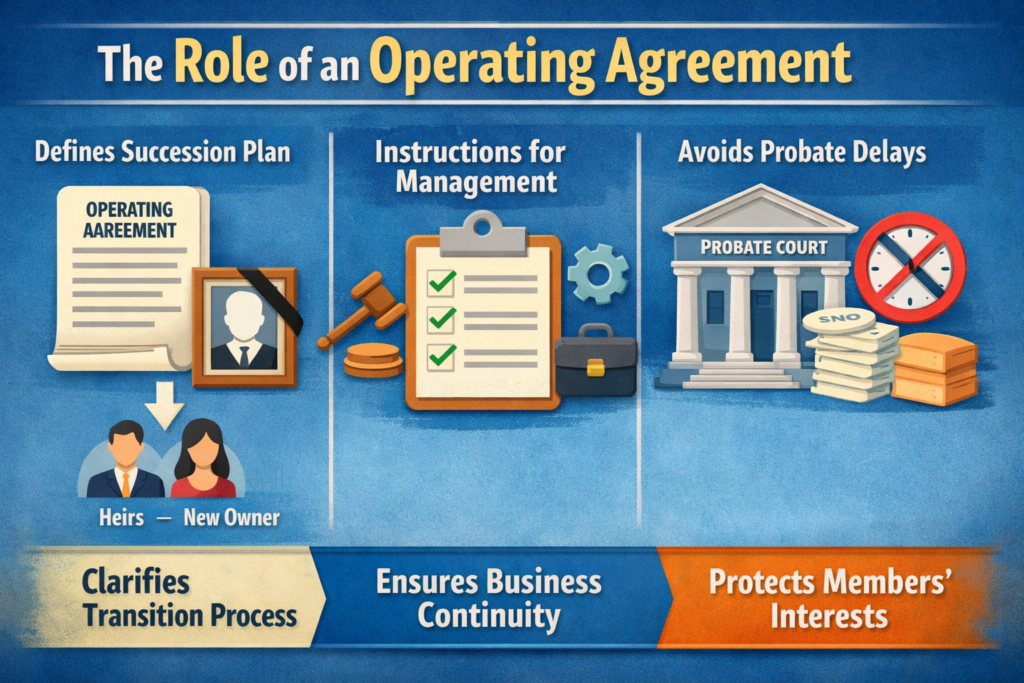
An LLC operating agreement is the most important document in determining what happens when a member dies.
Importance of Death Clauses
A well-drafted operating agreement may include provisions such as:
- Who inherits ownership
- Whether heirs can become members
- Buy-sell agreements for ownership interests
- Valuation methods for buyouts
These clauses help avoid disputes and ensure business continuity.
How to Draft an Effective Operating Agreement
An effective agreement should clearly outline:
- Ownership transfer procedures
- Succession planning
- Management transition rules
- Valuation of ownership interests
Working with an attorney helps ensure compliance with state law.
What If There Is No Operating Agreement?
Default State Laws
If there is no operating agreement, state law governs what happens. These default rules determine:
- How ownership transfers
- Whether the LLC continues or dissolves
Challenges Without an Agreement
Without clear guidance, issues may include:
- Disputes among heirs
- Delays in decision-making
- Increased legal costs
- Risk of unintended dissolution
How LLC Ownership Is Transferred After Death
Probate Process Overview
The deceased member’s ownership interest typically goes through probate, which includes:
- Validating the will
- Identifying assets
- Paying debts and taxes
- Distributing assets to heirs
Executor’s Role
The executor manages the estate’s interest in the LLC and ensures legal requirements are met. However, their authority over business operations depends on the operating agreement and applicable law.
Can an LLC Continue After the Owner’s Death?
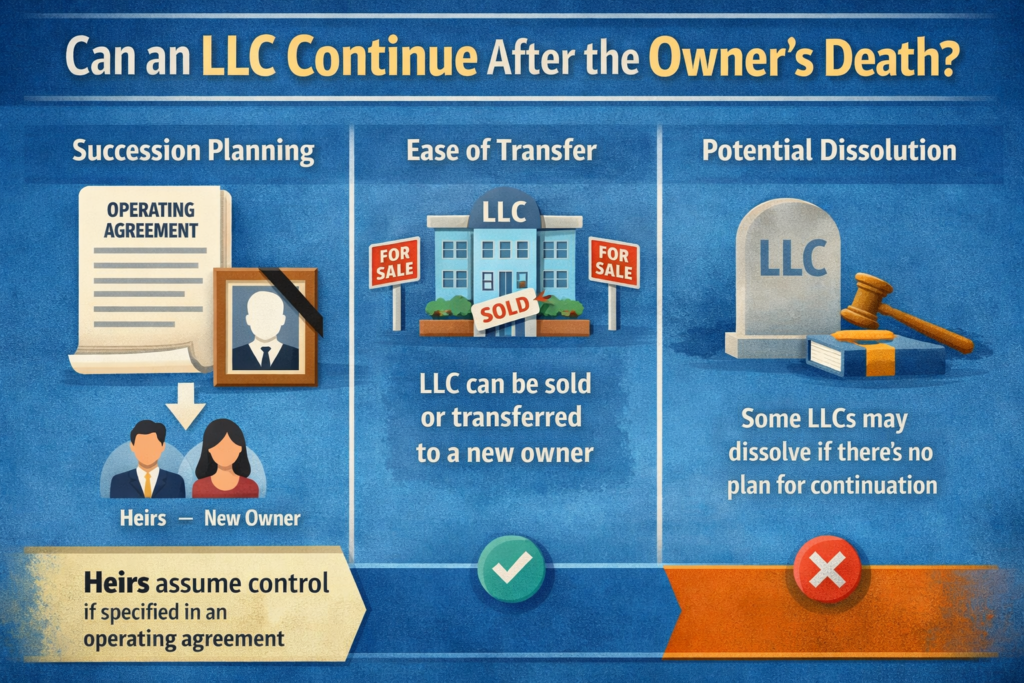
Conditions for Continuation
An LLC can continue operating if:
- The operating agreement allows it
- Remaining members agree
- State law permits continuation
Transitioning Management
Management responsibilities may shift to:
- Remaining members
- A designated successor
- A newly appointed manager
Clear planning ensures minimal disruption.
Tax Implications When an LLC Owner Dies
Tax Responsibilities of the Estate
The estate must:
- Report income earned up to the date of death
- File necessary tax returns
- Pay any applicable estate taxes
Step-Up in Basis
In many cases, the LLC interest receives a step-up in basis, meaning its value is adjusted to fair market value at the time of death. This can reduce future tax liability for heirs.
Impact on Remaining Members
Remaining members may experience changes in:
- Ownership structure
- Tax allocations
- Financial reporting
Consulting a tax professional is recommended.
Common Problems and Risks
Business Continuity Risks
- Lack of succession planning
- Operational delays
- Financial instability
Legal Disputes Among Heirs
- Conflicts over ownership
- Disagreements on management
- Potential litigation
How to Plan Ahead for LLC Succession
Business Succession Planning Strategies
- Create a detailed operating agreement
- Include buy-sell provisions
- Use trusts for ownership transfer
- Update plans regularly
Creating a Succession Plan
A strong plan should:
- Identify successors
- Define ownership transfer process
- Outline management transition
- Be communicated clearly
Do You Need a Lawyer?
When to Seek Legal Advice
You should consult a lawyer when:
- Drafting or updating an operating agreement
- Planning succession
- Handling disputes
Benefits of Professional Guidance
A lawyer can:
- Ensure compliance with state law
- Provide tax and legal guidance
- Draft enforceable agreements
- Help resolve conflicts
Conclusion
The death of an LLC owner can create significant legal and operational challenges, but the business does not automatically end. In most cases, the LLC can continue if there is proper planning in place.
Understanding how ownership transfers, the role of the operating agreement, and the impact of state law is essential. Proactive succession planning is the key to protecting your business and ensuring a smooth transition.
Frequently Asked Questions
What happens to a single-member LLC when the owner dies?
The LLC ownership becomes part of the estate and is transferred through probate to heirs or beneficiaries.
Can LLC ownership be transferred without an operating agreement?
Yes, but state law will control the process, which may lead to complications or disputes.
How do state laws affect LLC ownership transfer?
State laws determine how ownership is transferred, whether the LLC continues, and what rights heirs receive.

