

When creating a will, testators name beneficiaries to receive assets from their estate. But what happens if a beneficiary dies before the testator? This situation is more common than people think and can significantly impact how an estate is distributed.
Under U.S. law, the outcome depends on the wording of the will, whether a backup beneficiary is named, and how state anti-lapse laws apply. Understanding these rules is essential for proper estate planning and avoiding unintended consequences.
What Does It Mean When a Beneficiary Dies Before the Testator
A beneficiary is the person who is supposed to receive property under a will. The testator is the person who created the will.
If the beneficiary dies before the testator, they cannot inherit unless the will or state law provides another way for the gift to pass. This situation can change the entire distribution of an estate.
What Happens If a Beneficiary Dies Before the Testator
The outcome depends on several key factors:
- Whether the will names an alternate beneficiary
- Whether state anti-lapse laws apply
- Whether the will includes a residuary clause
Each of these determines where the inheritance ultimately goes.
Gift Lapses General Rule
The general rule in estate law is that if a beneficiary dies before the testator, the gift “lapses.” This means the gift fails and does not go to the original beneficiary.
When a gift lapses, it usually:
- Goes into the residuary estate, or
- Passes under intestacy if not covered by the will
Anti-Lapse Laws in the United States
Anti-lapse laws are designed to prevent gifts from failing in certain situations.
In many states, if the deceased beneficiary was a close relative of the testator and had surviving descendants, the gift may pass to those descendants instead.
For example:
- A parent leaves assets to their child
- The child dies before the parent
- The child’s children may inherit instead
However, these laws vary by state and do not apply in every situation.
A will can also override anti-lapse laws if it clearly states that the beneficiary must survive the testator to inherit.
What If the Will Names an Alternate Beneficiary
If the will includes a backup or alternate beneficiary, the process is simple.
The inheritance goes directly to the alternate beneficiary if the primary beneficiary dies first.
This is one of the most effective ways to avoid legal complications.
What If There Is No Alternate Beneficiary
If no alternate beneficiary is named and anti-lapse laws do not apply, the gift typically fails.
In this case:
- The asset usually goes to the residuary estate
- If there is no residuary clause, it may pass through intestate succession
This can lead to outcomes that do not match the testator’s original intent.
What Is a Residuary Clause and Why It Matters
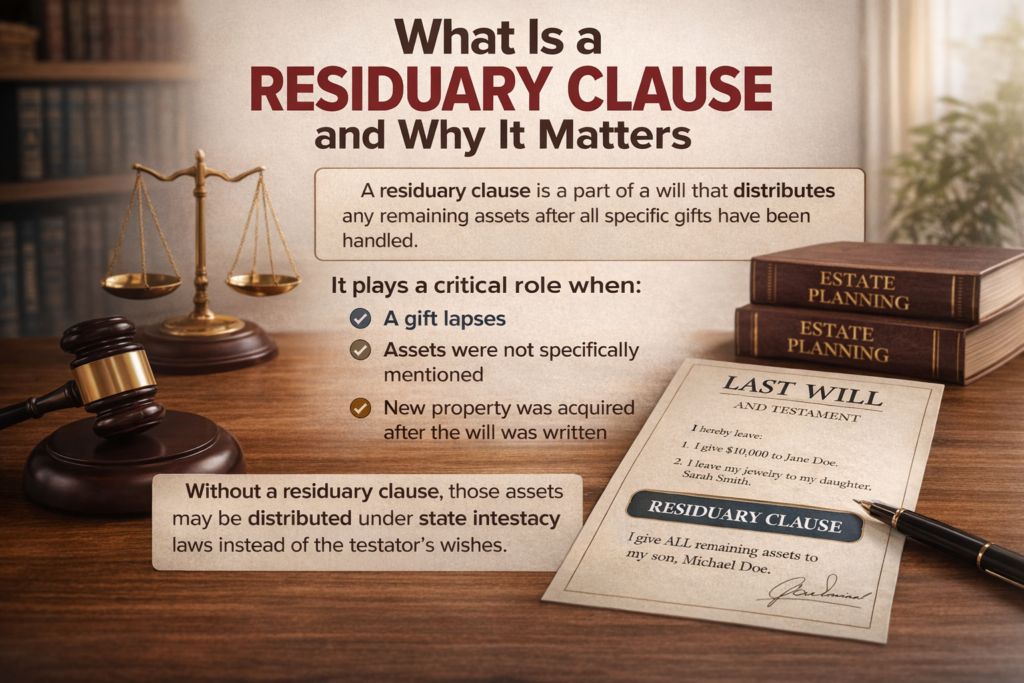
A residuary clause is a part of a will that distributes any remaining assets after all specific gifts have been handled.
It plays a critical role when:
- A gift lapses
- Assets were not specifically mentioned
- New property was acquired after the will was written
Without a residuary clause, those assets may be distributed under state intestacy laws instead of the testator’s wishes.
What Happens If There Is No Will
If there is no valid will, the estate is distributed according to state intestacy laws.
These laws typically prioritize:
- Spouse
- Children
- Parents
- Other relatives
The exact distribution depends on the state, but the outcome may not reflect what the person would have wanted.
Special Situations to Consider
Beneficiary Dies After Testator but Before Distribution
If the beneficiary dies after the testator but before receiving the inheritance, the outcome depends on survival rules.
In many states:
- The beneficiary must survive the testator by a certain period
- If they do, the inheritance becomes part of their estate
Simultaneous Death Situations
When it is unclear who died first, many states apply survivorship rules.
Often, a person must survive the other by about 120 hours to inherit.
If this requirement is not met:
- The beneficiary is treated as having died first
- The gift is handled under anti-lapse rules or alternate beneficiary provisions
State Law Differences You Should Know
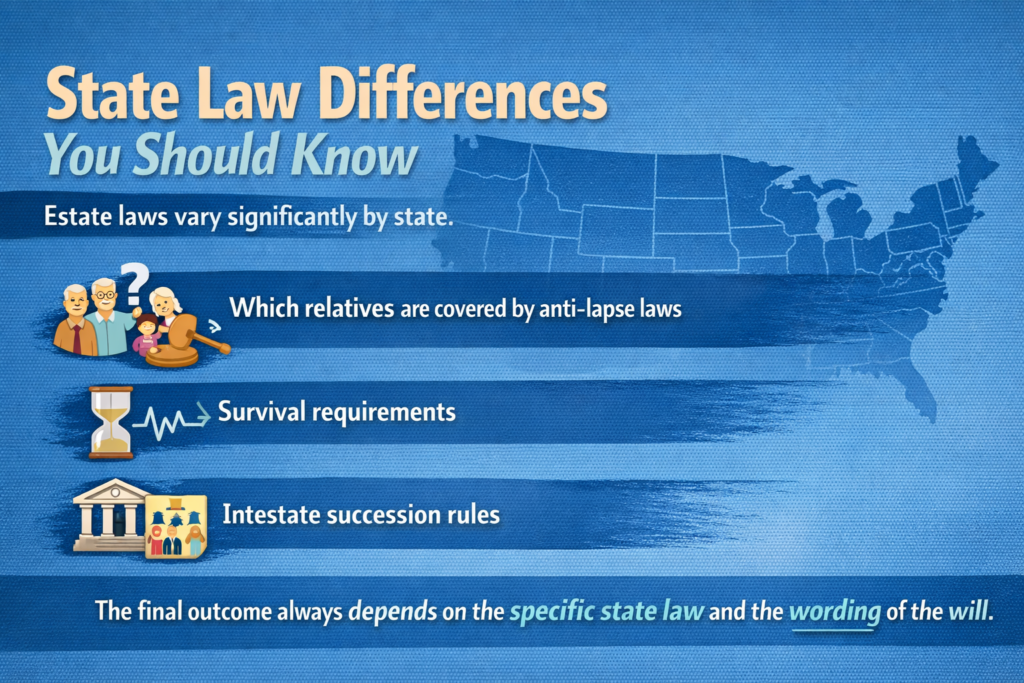
Estate laws vary significantly by state.
Key differences include:
- Which relatives are covered by anti-lapse laws
- Survival requirements
- Intestate succession rules
Because of this, the final outcome always depends on the specific state law and the wording of the will.
Common Problems and Legal Risks
Several issues can arise if this situation is not properly planned for:
- No alternate beneficiary named
- Outdated will
- Family disputes
- Misinterpretation of intent
These problems can delay estate administration and increase legal costs.
How to Prevent Issues in Your Estate Plan
To avoid complications, consider the following:
- Name alternate beneficiaries for every major gift
- Include a clear residuary clause
- Add survivorship requirements
- Update your will regularly
- Consider using trusts for more control
These steps help ensure your estate is distributed according to your wishes.
Do You Need a Lawyer
While simple estates may not require legal help, it is strongly recommended in many cases.
You should consider a lawyer if:
- You have significant assets
- Your family situation is complex
- You want to minimize disputes
A lawyer can ensure your will complies with state law and clearly reflects your intentions.
Conclusion
If a beneficiary dies before the testator, the inheritance does not automatically go to that person’s children or return to the estate in every case. The outcome depends on the will, state anti-lapse laws, alternate beneficiaries, and residuary clauses.
Proper estate planning is the best way to avoid confusion and ensure your assets are distributed exactly as you intend.
Frequently Asked Questions
What happens if a beneficiary dies before receiving inheritance
If the beneficiary dies before the testator, the gift may lapse unless saved by an alternate beneficiary or anti-lapse law.
Does inheritance go to the beneficiary’s children
Sometimes. This usually happens if anti-lapse laws apply or if the will directs it.
What is anti-lapse law
It is a state law that allows a deceased beneficiary’s descendants to inherit instead of the gift failing.
What happens if no alternate beneficiary is named
The gift usually goes to the residuary estate or passes through intestacy.
Can a will override anti-lapse laws
Yes, if it clearly states that the beneficiary must survive the testator.

